How to get your products recommended in ChatGPT shopping
In this article (10 sections)
We asked ChatGPT's search for the best robot vacuum, mattress, espresso machine and nine other products. Out of 193 links in those answers, 2 pointed to a store. The rest went to review sites, health and vet bodies, and a few brand websites.
That matters if you sell products. ChatGPT now shows product cards with prices and "buy" links, and you can feed it your catalog. But the written answer around those cards leans on other people's opinions of your product.
This post is part of our series on how to get your brand recommended by ChatGPT. The main guide has a short shopping section. Here you get our 60-answer test, OpenAI's newest merchant docs, and what to fix first.
I recently asked ChatGPT a food supplement question. I wanted to check the information and find shops that sell products that meet all my requirements. I trusted the analysis and was happy with the shop list. I ended up buying one product.
How we tested 60 shopping questions
On 16 November 2026 we picked 12 everyday products, from running shoes for flat feet to a kids water bottle. For each one we asked three kinds of questions a shopper might type.
| Question type | Example | Runs | Answers |
|---|---|---|---|
| Best overall | "What's the best robot vacuum for pet hair?" | 3 | 36 |
| With a budget | "Recommend a robot vacuum for pet hair under $300." | 1 | 12 |
| Small brands | "Can you recommend a robot vacuum for pet hair from a smaller independent brand, not one of the big names?" | 1 | 12 |
We sent them through OpenAI's API, the developer version of ChatGPT, with web search on and the location set to Chicago. That gives the same kind of written answer with cited links. It does not show the product cards you see in the ChatGPT app, so this test tells you which pages ChatGPT reads, not which products land in the cards.
A second AI call pulled out every product and store named. We sorted the 324 cited links by hand into groups. The raw answers are in data/tests/2026-11-16-shopping-prompt-test.json, and our method page explains how we run these tests.
On "best" questions, review sites decide
Most shoppers start broad. For the 36 "What's the best..." answers, here is where the links went.
Review sites and publishers took 63% of the links. For dog food, protein powder and running shoes, vet schools, health sites and podiatry groups filled most of the rest.
A small group of testers shows up again and again across all 60 answers.
Brand websites got 11%. Stores got 1%.
Five of the 36 answers cited nothing at all. For standing desks, natural deodorant, mattresses, protein powder and kids water bottles, ChatGPT sometimes answered from what it already knew, with no search links. Your product only shows up there if it was already well known when the model learned.
So for broad questions, the path into the answer runs through the sites that test products. If RTINGS, Wirecutter or the main review site in your niche has never heard of you, a perfect product page will rarely be the page ChatGPT reads.
Geocitely is a new directory, and I will not sell placements. I want the most honest reviews and listings, based on our own unbiased research. If you want onto lists like that, make your product easy to verify. Put clear public pricing and features on your site.
How we research and list tools is on our method page.
Ask for something specific and brand sites take over
The picture flipped as soon as the question got narrower.
With a budget in the question, brand sites got 32% of links and stores 22%. When we asked for a smaller independent brand, brand sites got 62%. In 10 of those 12 answers, ChatGPT cited at least one brand's own product page.
The brands were different too. The independent answers named 53 brands. Only 10 of them had appeared in the "best" or budget answers for the same product. Names like Soapwalla, Little Seed Farm, Flair, Nuzest and Open Farm got recommended straight from their own websites.
This is the best news in our data for a small seller. You may never win "best mattress", but buyers often ask with a reason attached: a budget, a skin type, a dog that throws up, a small kitchen. Those questions send ChatGPT to product pages that state that reason in plain words.
One exception is worth knowing. For mattresses, even the independent answer cited only Sleep Foundation and Tom's Guide. In crowded niches with strong review sites, they stay the gatekeeper.
We already write pages around specific buyer reasons on Geocitely. The same reason applies to a small business owner.
That is why we have lists for budget tools, free tools and agencies. Our test points the same way. Specific questions sent 62% of links to brand sites. Questions that named a budget, like "under $X", sent 32%.
One answer is not a ranking
We asked each "best" question three times. Brands were fairly steady: 21 of 96 brands (22%) showed up in all three runs. Specific products were not.
Of 196 products named, 12 came back every time. 162 appeared once. The big names repeated (Brooks and ASICS for flat feet, Sony and Bose for headphones, Hill's and Purina for sensitive stomachs), but the model they picked changed from run to run.
So check your product more than once before you decide ChatGPT ignores you, or that you have "made it". Our post on how to check if AI mentions your brand shows a free way to do that.
How do you get your products into ChatGPT shopping?
ChatGPT's product cards come from structured data, not from the written answer. OpenAI's help page says it uses "structured metadata from first-party and third-party providers", such as price and description. When several stores sell the same item, it ranks them by availability, price, quality and whether you are the maker or main seller (OpenAI Help Center, checked 16 November 2026).
There are three ways in. They changed again this autumn, so here is the state on 16 November 2026.
| If you sell on | What to do | What it costs |
|---|---|---|
| Shopify | Nothing to sign up for. Shopify Catalog shares eligible products with ChatGPT by default. Check Sales channels, then Agentic, in your admin. Your store must sell to US customers and have its terms, privacy and refund policies filled in. | No fees from ChatGPT, says Shopify |
| Etsy | Nothing. OpenAI says Etsy catalogs are already integrated. | No fees on purchases that start in ChatGPT |
| Anything else | Claim your business in ChatGPT Business Hub, verify your identity, then upload a feed in the product section. OpenAI's merchant page still mentions a waitlist, so expect some wait. | No fees on purchases, says OpenAI |
Shopping in ChatGPT is live for US users only. Shopify says your store can be based outside the US as long as it sells to US buyers.
The buy button no longer keeps people inside ChatGPT. Press reports say OpenAI moved away from Instant Checkout in March 2026, and that purchases now finish on your own site or app. So your checkout and your returns page still have to convince people.
What does a good product feed include?
A feed is a file, or a link to one, that lists every product with its details in fixed columns. OpenAI's feed schema asks for nine fields per item: an ID, title, description, product page link, brand, seller name, main image, availability and price. You also state which countries you sell to and where your store is.
Our test points to what matters in the details. ChatGPT picks products for a reason the buyer gave, so put those reasons in the feed and on the page. "Fragrance free, safe for sensitive skin, 2.5 oz" beats "Our best-selling deodorant". OpenAI suggests titles up to 150 characters and plain text descriptions.
Three things trip people up. Keep each product ID stable when the price or photo changes. Use a real availability value, because OpenAI rejects rows without one. And never put a placeholder like "n/a" in an empty field. Just leave it out.
Do product pages and crawlers still matter?
Yes, because the written answer still comes from the web. We checked the brand pages ChatGPT cited in our test. Of 34 product and shop pages we could load, 29 (85%) had Product schema, the hidden code that tells search engines a page is a product with a price. That does not prove schema wins citations, since we had no comparison group. It does show what the cited pages tend to look like.
We also read robots.txt, the file where sites tell crawlers what they may visit, for every cited site and 14 big US retailers. Amazon blocks OAI-SearchBot, the crawler ChatGPT search uses. Amazon was cited once in 60 answers, but named as a place to buy in 8. Walmart, Target, Etsy, Chewy and Ulta allow it.
If your robots.txt blocks OAI-SearchBot, unblock it. To check yours, open yourdomain.com/robots.txt and look for GPTBot, OAI-SearchBot and ChatGPT-User. If any of those user agents is disallowed, change that. Our post on how ChatGPT chooses its sources covers the crawler side step by step.
I claimed Geocitely in ChatGPT Business Hub today. It took about 15 minutes. I added a DNS TXT record, answered a returns question even though we are not a shop, picked the company type, then completed the identity check. The first week of data showed 8,174 mentions of geocitely.com and 1 click through to the site. Our robots.txt already allows GPTBot, OAI-SearchBot and ChatGPT-User.
How to track whether ChatGPT shows your products
Our test checks written answers. A few trackers in our directory say they also watch ChatGPT's product cards. Prices are from each vendor's site on the date shown.
| Tracker | What it says about shopping | Price check |
|---|---|---|
| Trakkr | ChatGPT shopping add-on shows whether your products appear in product cards and which competitors do | $49 per brand a month on top of a plan from $100 a month (16 Nov 2026) |
| Peec AI | AI shopping SKU tracking | Plans from $95 a month (12 Nov 2026) |
| Rankscale | Shopping analytics among its features | Plans from $99 a month (20 Nov 2026) |
| Promptwatch | Shopping insights on the Business plan | Business $579 a month (13 Nov 2026) |
| Profound | ChatGPT Shopping tracking | Custom pricing after a 7-day free trial (11 Nov 2026) |
Check which engines and markets each one covers before you pay. All prices side by side are on our pricing page, and the free AI visibility tools list is a good place to start.
FAQs
Can I pay to get my products recommended in ChatGPT?
Not in the normal answer. OpenAI says product results are not ads. ChatGPT ads are separate and labelled, see our post on ChatGPT ads.
Do I need Shopify to sell in ChatGPT?
No. Shopify and Etsy stores are connected already. Other sellers can claim their business in Business Hub and upload a product feed. Shopping is live for US users only.
Can people buy inside ChatGPT?
Not anymore for most stores. Press reports say that since March 2026 purchases finish on the seller's own website or app, often in a browser window inside ChatGPT.
Does ChatGPT use Amazon reviews?
Rarely as a cited link in our test. Amazon blocks OpenAI's search crawler, and our 60 answers cited it once, though 8 answers named it as a store.
Why does ChatGPT recommend different products each time?
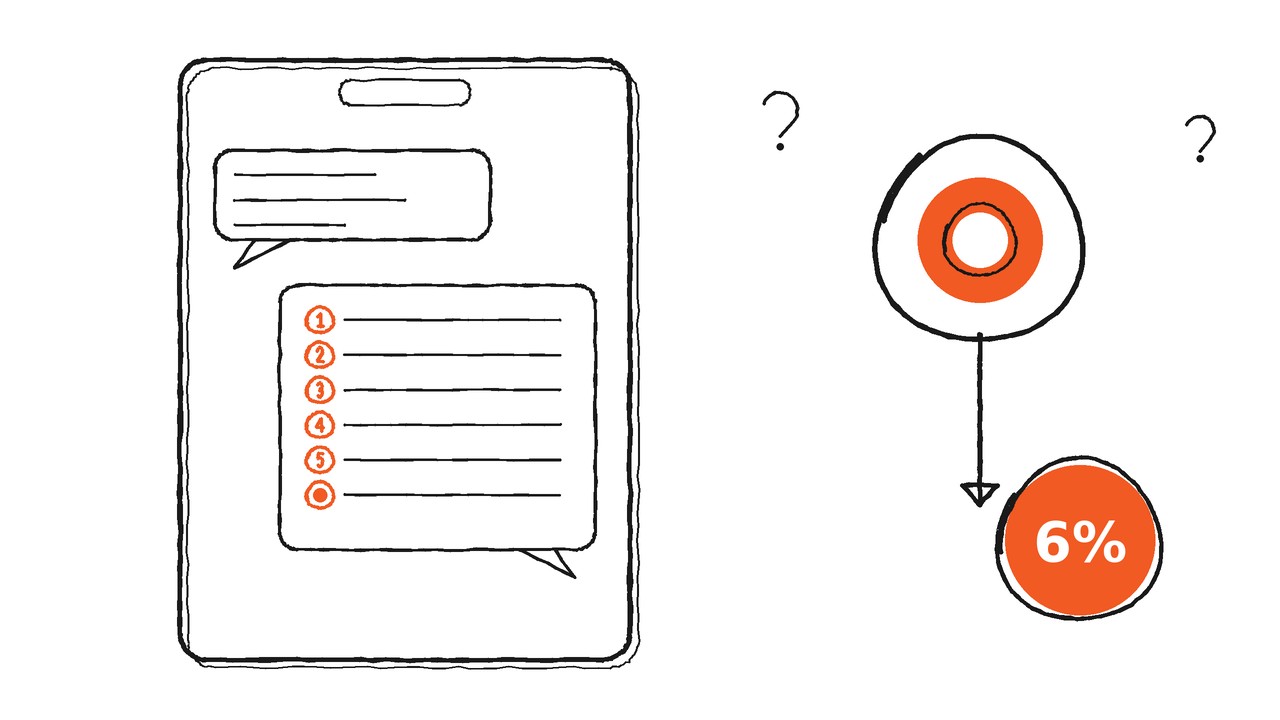
It searches the web again for each answer. In our test only 6% of products came back in all three runs of the same question.
Which sites does ChatGPT trust for product recommendations?
In our 60 answers, review sites like RTINGS, Tom's Guide and Sleep Foundation were cited most. Health and vet bodies mattered for food, supplements and shoes.
What to do this month
- Check your channel. On Shopify, open Sales channels, then Agentic, and fix anything marked ineligible. Elsewhere, claim your business in Business Hub.
- Rewrite your top product pages around the reasons people buy: who it is for, the problem it solves, size, price.
- Make sure your robots.txt lets GPTBot, OAI-SearchBot and ChatGPT-User in, and your product pages carry Product schema.
- Get your product in front of the review sites and testers in your niche. On broad questions, they are who ChatGPT reads.
- Ask ChatGPT your buyers' questions three times on different days and note who gets named.
For the wider playbook, including how ChatGPT picks brands outside shopping, go back to how to get your brand recommended by ChatGPT. Local business? Read how to get ChatGPT to recommend your local business.
Sources
- Geocitely test of the OpenAI API with web search: 60 shopping questions across 12 product types (16 Nov 2026)
- OpenAI developer docs: Submit product feeds (live doc checked 16 Nov 2026)
- OpenAI developer docs: Product feed schema (live doc checked 16 Nov 2026)
- OpenAI Help Center: Shopping with ChatGPT search (live doc checked 16 Nov 2026)
- OpenAI: Power product discovery in ChatGPT for merchants (checked 16 Nov 2026)
- Shopify Help Center: Selling on ChatGPT (checked 16 Nov 2026)
- Trakkr pricing (checked 16 Nov 2026)
- OpenAI Help Center: Setting up your business on ChatGPT (live doc checked 16 Nov 2026)
- Promptwatch pricing (checked 13 Nov 2026)
- Rankscale pricing (checked 13 Nov 2026)
- Peec AI pricing (checked 12 Nov 2026)
- OpenAI: Powering product discovery in ChatGPT (March 2026)
All prices were checked on each vendor's official pricing page on the date shown. Prices change, so confirm before you buy.
Tools mentioned





See where your brand stands in AI answers
Run the free AI visibility check. It takes a minute and the result comes by email.
Run the free check →Keep reading
Get the free GEO tool pricing sheet + weekly AI visibility tips
Every GEO tool I track on one sheet, each price checked on the vendor's own page.
Plus practical AI visibility tips, new tools and price changes.
One email a week, no spam. Unsubscribe any time.
By subscribing you agree to our Privacy Policy.